“Those coves don’t exist on any map I’ve ever approved. So tell me, Captain—what exactly are you teaching your students to find?”
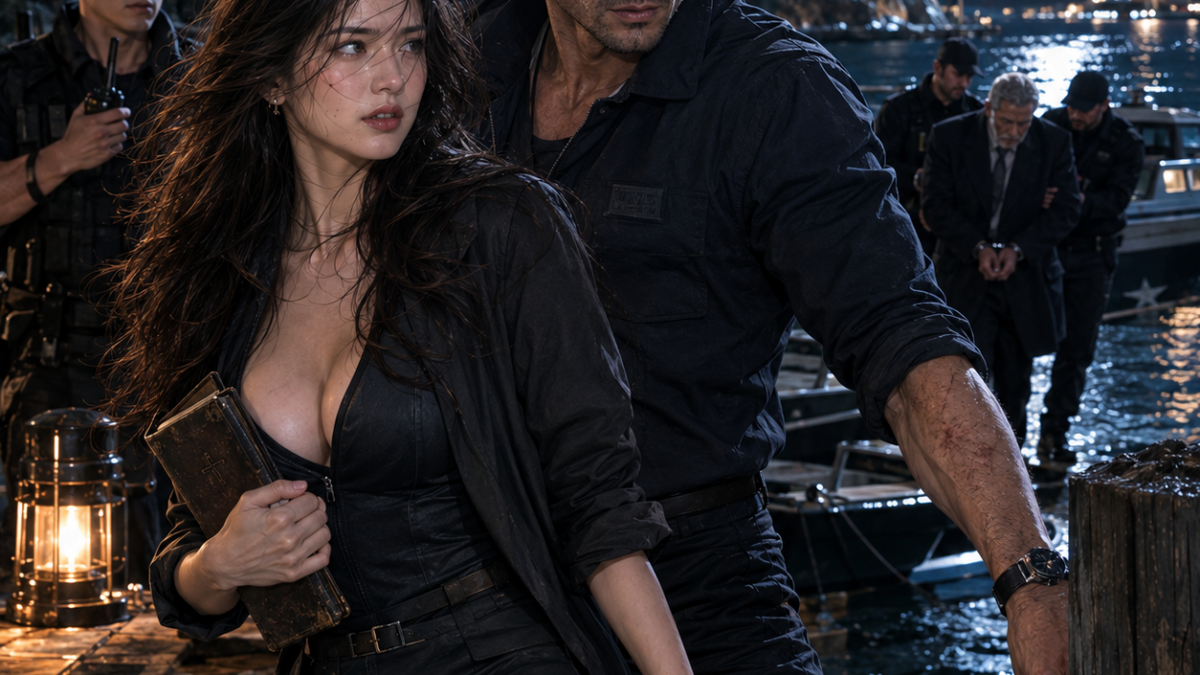
“Those coves don’t exist on any map I’ve ever approved. So tell me, Captain—what exactly are you teaching your students to find?”
She thought she was auditing a pilot academy’s training charts. She never expected to find her grandmother’s prayers hiding in plain sight—or the man who’d kill to keep them secret.
The chart was wrong.
Elena Morozova had been staring at it for six minutes—long enough for the harbor wind to flip the corner of the page twice, long enough for her coffee to go cold in its paper cup—and the chart was still wrong.
Not wrong wrong. Not the kind of error she could flag with a red pen and a condescending email to the maritime registry office. The kind of wrong that made her pull out her phone and check the coordinates against the port authority’s own database, then against the federal nautical charts, then against a 1970s survey map she had saved in her personal files because she was the kind of person who kept 1970s survey maps in her personal files.
The coves were there. On the academy’s training chart, printed in crisp black ink, annotated with water depths and tidal patterns and approach vectors that would make a naval architect weep with joy. Perfectly documented. Perfectly detailed. Perfectly—
Impossible.
Because they didn’t exist.
Elena set down her coffee, pulled a pencil from behind her ear, and circled the first anomaly. Then the second. Then the third. By the time she reached the seventh, her pencil lead had snapped and she was using her fingernail to press crescent moons into the paper.
“Problem with the chart?”
She didn’t jump. She wanted to—her nervous system had already drafted the memo—but she had spent four years in the port authority’s inspection division learning to keep her face as still as deep water, and she wasn’t about to let some pilot instructor see her flinch.
She looked up.
Captain Roman Volkov was not what she had expected when she’d been assigned this audit. She had expected bureaucratic tedium—a mid-level administrator with bad posture and worse coffee breath, someone who would hand her binders and sigh when she asked questions. Instead she got a man who filled the doorway of the chart room like he’d been built specifically to make doorways feel inadequate.
Six-foot-something. Dark hair cut short enough to suggest military discipline but long enough to suggest he didn’t care about regulations. Gray eyes the color of the harbor in February—the kind of gray that wasn’t passive but waiting, holding storms in reserve. He wore the academy’s standard navy instructor’s jacket, but the sleeves were rolled to the elbow in a way that made the standard issue look like a personal insult.
His forearms had a scar. Old, white, running from wrist to elbow.
She dragged her eyes back to the chart.
“The chart’s fine,” she said. “That’s the problem.”
Roman Volkov stepped into the room. The door clicked shut behind him—not loudly, not threateningly, just a soft, final sound that made the small space feel smaller.
“Elena Morozova,” he said. Not a question. “Port authority. Inspection division. Four years, three commendations, one disciplinary write-up for unauthorized database access that was later rescinded because you were right.”
She didn’t ask how he knew. Men like him always knew. “And you’re Captain Roman Volkov. Academy director. Twelve years of service. Certified harbor pilot for the eastern seaboard. No disciplinary record, which is either impressive or suspicious.”
“Or both.”
“Or both,” she agreed.
He stopped on the other side of the table. Close enough that she could smell salt and cedar and something underneath that she couldn’t name—something that made her think of old libraries and locked doors.
“That chart,” he said, nodding at the paper, “was approved by the previous inspector. Three years ago. It’s standard training material.”
“It’s standard training material,” Elena repeated, “for coves that don’t exist.”
Something flickered in his eyes. Too fast to name. “Old survey data. The coastline shifts. Erosion, dredging—”
“Erosion doesn’t create seven perfectly detailed coves with tidal data and then erase them from every federal chart, every state registry, and every historical survey I can access.” She pulled out her phone, angled the screen toward him. “These coordinates—” she tapped the first circled cove “—put this location three miles inland. There’s a strip mall there. A Bath & Body Works.”
Roman Volkov looked at her phone. Then at the chart. Then back at her.
“Maybe the Bath & Body Works is new.”
“Maybe,” Elena said, “someone at this academy is teaching cadets to navigate to places that don’t exist, using charts that were never filed with the registry, and I want to know why.”
The silence stretched. Outside, a foghorn sounded—low and mournful, the harbor’s heartbeat. Inside, the chart room felt like a held breath.
Roman Volkov leaned forward, palms flat on the table. The movement was casual, almost lazy, but Elena noticed the way his weight shifted—balanced, ready, the way a man stood when he’d spent years learning to absorb impact.
“Or,” he said quietly, “maybe you’re looking at a training exercise designed to test a cadet’s ability to navigate by dead reckoning in uncharted waters. A simulation. A hypothetical.”
“With real tidal data? Real approach vectors? Real—” She flipped to the back of the chart, where someone had written in careful, old-fashioned script: Saint Nicholas Cove—sheltered, deep anchorage, good holding ground.
She stopped.
Stared.
The pencil dropped from her fingers and rolled across the table.
“Saint Nicholas,” she said. Her voice came out wrong—small, strange, like it belonged to someone else.
Roman Volkov didn’t move. But something in his posture changed—a tension that hadn’t been there before, a coil that tightened.
“You know that name,” he said. Not a question.
“I—” Elena forced herself to breathe. “It’s a saint. The patron saint of sailors. Fishermen. Travelers.”
“Among other things.”
She looked at the chart again. At the seven coves, each marked not with coordinates but with names in that same careful, old-fashioned script: Saint Nicholas. Saint Barbara. Saint Elmo. Saint Brendan. Saint Jude. Saint Christopher. Saint Michael.
Her grandmother’s voice, rough with age and cigarettes and seventy years of living on the wrong side of the law, echoed in her memory: Saint Nicholas, bless this boat. Saint Barbara, guard the waters. Saint Elmo, light the way home.
Every fishing boat. Every single one, for as long as Elena could remember. Her grandmother had stood on the dock with a bottle of cheap vodka and a prayer book older than the Soviet Union, and she had blessed each boat by name—not the boat’s name, but the saint’s name, as if every vessel had a secret identity that only God and the sea were supposed to know.
Elena had thought it was superstition. Old-country nonsense. The kind of thing that made her roll her eyes and make excuses to leave before the blessing started.
Now she was looking at seven coves that didn’t exist, marked with seven saints who were supposed to protect people who needed protection.
People fleeing the organization.
The thought came from nowhere. From somewhere. From the part of her brain that had spent four years learning to read between the lines of shipping manifests and cargo lists, to notice the gaps, the inconsistencies, the places where the official story didn’t quite cover the reality.
“Captain Volkov,” she said slowly, “what exactly are you teaching your students?”
He straightened. The movement was unhurried, controlled, but there was something new in his eyes now—something sharp and evaluating, like a blade being tested against stone.
“I’m teaching them to navigate,” he said. “Including in waters that aren’t on any map.”
“Why?”
“Because those waters exist. And the people who need to use them—” He stopped himself. Just barely. She saw the catch, the hesitation, the recalibration. “—the people who need to navigate them don’t always have the luxury of official charts.”
Elena’s heart was pounding. She could feel it in her throat, in her temples, in the pulse point behind her ears. She was standing on the edge of something—something dangerous, something that had been hiding in plain sight for years, something that her grandmother had known about and never told her.
“You’re helping them,” she said. Not quite a question. “Whoever they are. You’re teaching cadets how to land them in coves that don’t exist.”
Roman Volkov looked at her for a long moment. The foghorn sounded again. The wind rattled the window. The chart sat between them like a confession.
“Ms. Morozova,” he said, “I think we should continue this conversation somewhere else.”
Chapter Two: The Director’s Request
Somewhere else turned out to be a private office on the academy’s second floor, with a window that faced the harbor and a door that locked from the inside. Elena noted the lock. She noted the way Roman Volkov positioned himself between her and the door—not threateningly, not overtly, but with the kind of instinctive body language that suggested he’d spent years learning how to control a room.
She sat in the chair he gestured to. She didn’t take off her coat.
“Your grandmother,” he said. “She was a Volkov.”
Elena’s blood went cold.
“My grandmother was a fisherman’s widow,” she said carefully. “She was born in a village outside Vladivostok. She emigrated in 1978. She spent forty years working the docks and blessing fishing boats and—”
“Blessing fishing boats with the names of saints.” Roman Volkov leaned against the desk, arms crossed. “Not the boat’s name. Not the captain’s name. The saint’s name. As if every boat had a secret identity that only certain people were supposed to know.”
She hadn’t told him that. She hadn’t told anyone that—not the full story, not the strange specificity of her grandmother’s blessings, not the way she’d always wondered if there was more to those prayers than Catholic superstition.
“How do you know that?”
“Because my grandmother did the same thing.” His voice was quiet, almost gentle, but there was an edge underneath it—a warning, maybe, or an invitation. “Different village. Different saints, some of them. Same tradition.”
Elena stared at him. The harbor light caught his face—the sharp planes of his cheekbones, the faint lines at the corners of his eyes, the scar on his forearm that looked like it had been earned in a fight, not an accident.
“What tradition?” she asked. “What are you talking about?”
Roman Volkov was silent for a moment. Then he pushed off from the desk, crossed to the window, and stood looking out at the water.
“After the Soviet Union fell,” he said, “there were a lot of people who needed to disappear. Political dissidents. Whistleblowers. Journalists who’d asked the wrong questions about the wrong people. Some of them got out through official channels. Most didn’t.”
“And your academy—”
“Was founded in 1994. Officially, to train harbor pilots for commercial shipping. Unofficially—” He turned, met her eyes. “To train pilots who could land people in places that didn’t exist on any map. Hidden coves. Unmonitored harbors. Routes that the authorities didn’t know to watch.”
“Who were they running from?”
“Everyone.” The word was flat, hard. “The government. The oligarchs. The people who’d taken over the criminal enterprises the Soviet state had left behind. Including—” He stopped. Started again. “Including the Bratva.”
Elena’s hands were shaking. She pressed them flat against her thighs, hidden by the coat.
“The Bratva,” she repeated. “As in—”
“As in organized crime. As in the people who run half the shipping in this harbor and most of the ports up and down the coast. As in the men who would very much like to know where my academy is teaching cadets to land refugees.”
The word refugees hung in the air between them.
“Refugees,” Elena said slowly. “People fleeing—”
“People fleeing the organization. People who’ve seen too much, know too much, testified against the wrong men. People who need to disappear before someone decides they’re a liability.” Roman Volkov’s jaw tightened. “The coves are marked with saints’ names because the saints are the passcodes. Saint Nicholas means the cove has a deep anchorage and good holding ground. Saint Barbara means the approach is sheltered from northern storms. Saint Elmo means there’s a lighthouse nearby—a real one, decommissioned, but still functional if you know how to use it.”
“And Saint Jude?”
His eyes met hers. “Saint Jude is for the desperate cases. The ones the other coves can’t accommodate. The ones who need to land at night, in bad weather, with no margin for error.”
Elena thought about her grandmother—her rough hands, her sharp tongue, her refusal to explain why she blessed boats by saints’ names instead of the names painted on their hulls. She thought about the summer she’d spent asking questions and the answers she’d never received.
“How many people have you saved?” she asked.
Roman Volkov’s expression didn’t change. But something in his eyes—something behind the gray—flickered.
“Not enough.”
“And the academy director—the one who asked me to approve these charts as historical material and close the review—”
“Was doing his job.” Roman’s voice was careful, controlled. “The director doesn’t know everything. He knows the charts are used for training. He knows they’re approved by the port authority. He doesn’t know what the coves are actually for.”
“But you do.”
“I’m the one who marks them.”
The confession landed between them like a stone in still water. Elena felt the ripple of it—the implications, the danger, the sheer recklessness of what he was telling her.
“You’re telling me this,” she said, “because—”
“Because you’re a Volkov.” He said her grandmother’s name like it meant something. “Because your grandmother helped my grandmother set up the first routes. Because if I don’t tell you, someone else will—someone who won’t be as careful about how they explain it.”
“I don’t understand.”
Roman Volkov crossed the room. He stopped in front of her chair, close enough that she could see the flecks of darker gray in his eyes, the faint stubble along his jaw, the way his hands curled at his sides like he was holding himself back from something.
“Your grandmother,” he said, “was part of the network that got my family out of Russia. She was a Volkov by marriage, not birth, but she knew the routes, knew the coves, knew the saints’ names before she ever set foot on American soil. When she emigrated, she brought that knowledge with her—and she used it to help other people escape.”
Elena’s throat was tight. “She never told me.”
“She never told anyone who didn’t need to know.” His voice softened, just slightly. “She was protecting you. The less you knew, the safer you were.”
“And now?”
“Now you’ve found the charts. Now you’ve seen the names. Now you’re asking questions that the wrong people might hear.” He paused. “Now you’re not safe.”
Elena stood up. The movement was sudden, sharp, and she saw him flinch—just barely, just for a second—before he controlled it.
“Is that a threat?”
“It’s a fact.” He didn’t back away. “The people who run the Bratva in this city—they’re not stupid. They know that the academy exists. They suspect what we’re doing. They haven’t moved against us yet because we’re careful, because we’ve never left a trail they could follow. But you—” He stopped. “You’re a port authority inspector who found something she wasn’t supposed to find. If you file a report, if you flag the charts, if you do what you’re supposed to do—”
“Then they’ll know.”
“Then they’ll know.”
Elena’s mind was racing. She thought about her grandmother, who had died three years ago with a rosary in her hand and the name Saint Michael on her lips. She thought about the coves—the impossible coves, the coves that didn’t exist, the coves that had been hiding in plain sight for decades. She thought about the cadets she’d seen in the hallway, young and earnest and completely unaware of what they were actually being trained for.
And she thought about the fact that she was standing in a locked room with a man who had just confessed to helping people disappear.
“What do you want me to do?” she asked.
Roman Volkov’s expression didn’t change. But something in his posture shifted—a relaxation, maybe, or a resignation.
“Approve the charts,” he said. “Close the review. File your report with the port authority saying that everything is in order.”
“And if I don’t?”
“Then you’ll be putting a target on your back. And on mine. And on every person who’s ever used those coves to escape something worse than death.”
Elena looked at him. At the scar on his forearm, the gray eyes, the hands that had marked seven coves with the names of saints. She thought about her grandmother, who had blessed boats by saints’ names and never explained why. She thought about the tradition that had been passed down—not through blood, but through salt water and secret keeping.
She thought about the fact that she had a choice.
“One condition,” she said.
Roman’s eyebrows lifted. “You’re bargaining?”
“I’m negotiating. That’s what inspectors do.” She pulled her coat tighter. “I’ll close the review. I’ll approve the charts. I’ll file the report. But I want to see the coves. All of them. I want to know what my grandmother was part of.”
Roman Volkov stared at her for a long moment.
“It’s dangerous,” he said.
“I know.”
“If we go out there, if someone sees us—”
“Then we’ll deal with it.” She met his eyes. “I’m not going to approve something I don’t understand. And I’m not going to let my grandmother’s legacy be something I hide from. If she helped you—if she helped them—then I deserve to know.”
The silence stretched. The foghorn sounded. The light through the window shifted as a cloud passed over the sun.
“Fine,” Roman said at last. “But you do exactly what I tell you. When I tell you. No questions, no deviations, no inspector instincts.”
“I can’t promise that.”
“Then you can’t come.”
Elena smiled. It was a small smile, sharp at the edges, the kind of smile her grandmother had worn when she was bargaining at the fish market.
“I can promise to try,” she said. “That’s the best you’re going to get.”
Roman Volkov looked at her like she was a problem he hadn’t anticipated—a complication he wasn’t sure he wanted.
“Tomorrow night,” he said. “Wear something dark. Bring your grandmother’s rosary if you have it.”
“I don’t have a rosary.”
“Then bring the map you used to find the coves. The one you’ve been keeping in your personal files since 2019.”
Elena’s blood went cold again. “How do you know about—”
“Because I’ve been watching your career since you joined the port authority.” He didn’t apologize. He didn’t even look apologetic. “You’re not the only one who notices things.”
He crossed to the door, unlocked it, and held it open.
“Tomorrow night,” he said. “Don’t be late.”
Elena walked out of the office, down the stairs, out of the academy, and onto the dock. The harbor wind hit her like a wall—salt and diesel and the faint, fishy smell of low tide. Her heart was pounding. Her hands were shaking.
She had just agreed to go into hiding with a man she’d met an hour ago—a man who ran a pilot academy that was secretly a smuggling network, a man who had threatened her and protected her in the same breath, a man whose gray eyes made her feel like she was standing on the edge of something that had no name.
She looked out at the water, at the fishing boats bobbing in their slips, at the gulls wheeling overhead.
Her grandmother had blessed those boats with the names of saints. Her grandmother had known the coves. Her grandmother had been part of something that Elena had never understood.
Tomorrow night, she would see it for herself.
She pulled out her phone and texted the one person she trusted—her friend Mira, who worked in the port authority’s IT department and never asked questions that she didn’t want to know the answers to.
I’m going to be out of contact for a while. Don’t worry.
Mira’s response came back in seconds: What did you find?
Elena looked at the chart still folded in her bag. At the seven coves. At the seven saints.
She typed: The truth.
Then she turned off her phone, walked back to her car, and drove home through streets that suddenly felt different—more dangerous, more alive, more full of secrets than they’d ever been before.
Chapter Three: The Inheritance
The coves were real.
Elena stood on the deck of a twenty-two-foot motorboat, hair whipping in the wind, and watched the coastline of Massachusetts unfold before her like a secret being told. The harbor lights were behind them. Ahead, nothing but dark water and darker rocks—the kind of coastline that had been the death of ships for centuries.
“Saint Nicholas Cove,” Roman said, cutting the engine. “Approach vector: zero-nine-five degrees. Hold until you see the white marker.”
“What white marker?”
“You’ll know when you see it.”
The boat drifted in the darkness. Elena could feel the swell underneath them—gentle, steady, the breathing of a sleeping giant. She could hear waves breaking somewhere ahead, the wash of water against stone.
And then she saw it. A flash of white in the darkness. A rock face, pale and smooth, that caught the moonlight like a mirror.
“That’s the marker?”
“Geological anomaly. Quartz vein in granite. Only visible at certain angles and certain tides.” Roman’s voice was quiet, steady. “If you know what you’re looking for, you can find it. If you don’t—” He shrugged. “You crash into the rocks and die.”
“Comforting.”
“I try.”
He turned the wheel, and the boat slid past the white marker, into a narrow opening that Elena would never have seen if she hadn’t been looking for it. The cove opened up ahead—a small, sheltered anchorage, maybe fifty yards across, with a beach of dark sand and a wooden dock that looked older than the American Revolution.
“Saint Nicholas,” Roman said. “Patron saint of sailors. The first cove in the network. My grandmother marked this one in 1995, when the first refugees came through.”
“Who were they?”
“A family from St. Petersburg. A woman and her two daughters. Her husband was a journalist who’d been investigating corruption in the Bratva’s shipping operations. He was killed three days before they fled.”
Elena’s stomach clenched. “What happened to them?”
“They got out. Landed here, at Saint Nicholas. My grandmother met them on the dock with blankets and hot tea and a bus ticket to Canada.” Roman’s voice was flat, but there was something underneath it—something that sounded like grief. “They’re still there. The daughters are grown now. One’s a doctor. One’s a teacher.”
“And the wife?”
“She died last year. Cancer. But she lived long enough to see her daughters grow up. Long enough to see them become something other than what the Bratva would have made them.”
Elena looked at the cove—at the dark water and the old dock and the beach that had been the end of one journey and the beginning of another. She thought about her grandmother, who had blessed boats by saints’ names and never explained why. She thought about the family that had landed here, fleeing a world that would have killed them.
“Why the saints?” she asked. “Why not coordinates?”
“Coordinates can be found. They can be traced, recorded, used against you.” Roman turned to look at her. “But names—” He paused. “Names can be carried in your heart. In your prayers. In the way you bless a fishing boat before it leaves the harbor. If you don’t have a chart, if you don’t have coordinates, if you only have the names of saints and the faith that they’ll guide you—” He shrugged. “Some people would call that foolish. I call it the only way to survive when the people who want you dead have access to every map and every database and every official record.”
Elena was quiet for a moment.
“My grandmother,” she said. “She used to bless fishing boats. Saint Nicholas for the ones heading north. Saint Barbara for the ones going out in storm season. Saint Jude for the ones that were—” She stopped. “For the ones that were carrying something dangerous.”
Roman’s eyes sharpened. “She told you that?”
“She didn’t tell me anything. I overheard her, once, when I was twelve. She was talking to a man on the dock—I didn’t see his face, I was hiding behind a crate of fish. She said, ‘Saint Jude is for the desperate cases. The ones who need a miracle.'” Elena swallowed hard. “I thought she was talking about the weather.”
“She was talking about the people.”
“What people?”
“The people who needed to disappear. The ones who were fleeing something worse than death. The ones who were carrying secrets that would get them killed if anyone found out.” Roman’s voice was quiet. “Your grandmother was one of the most important members of the network. She didn’t just bless boats—she marked routes. She identified safe houses. She coordinated the timing of arrivals so that the Bratva’s watchers wouldn’t notice.”
Elena’s hands were shaking. “She never told me.”
“She never told anyone. That was the point.” Roman paused. “But she left something for you.”
“What do you mean?”
He crossed to the small cabin, rummaged in a compartment, and came back with a leather-bound book—old, worn, the cover cracked and peeling.
“This was her prayer book,” he said. “She gave it to my grandmother, who gave it to my father, who gave it to me. It’s supposed to go to you, when you were ready.”
Elena stared at the book. At the cracked leather, the gold embossing worn away by time and hands and weather. She thought about her grandmother, who had died with a rosary in her hand and the name Saint Michael on her lips. She thought about the summer she’d spent asking questions and the answers she’d never received.
She took the book.
The pages were old, brittle, yellowed with age. They smelled like salt and incense and something else—something that made Elena think of her grandmother’s kitchen, of the fish soup she’d made every Friday, of the way she’d hummed while she cooked.
The pages were covered in handwriting. Not printed text—handwriting, in blue ink and black ink and pencil, in English and Russian and something that might have been Ukrainian. Notes in the margins. Names underlined. Dates circled.
And on the first page, in her grandmother’s handwriting, a single sentence:
For Elena, who will find the saints when she is ready.
“How did you know?” Elena whispered. “How did you know I’d find the charts? That I’d ask questions? That I’d—”
“Because you’re a Volkov.” Roman’s voice was gentle. “Because your grandmother saw something in you, even when you were a child. She told my grandmother that you were the one who would carry on the work. Not because you wanted to—because you couldn’t help it.”
“I don’t understand.”
“You notice things.” He gestured at the cove, the boat, the book. “You see the gaps in the official story. You ask the questions no one else thinks to ask. And you don’t stop until you have answers.” He paused. “That’s what makes you dangerous. That’s what makes you valuable. That’s what makes you a Volkov.”
Elena looked at the book in her hands. At the handwriting of her grandmother, who had never told her the truth, who had protected her by keeping secrets, who had died with the name of a saint on her lips and the weight of a network on her shoulders.
“I’m not a Volkov,” she said. “I’m a Morozova.”
“By birth.” Roman’s eyes met hers. “But by blood, by inheritance, by the tradition that was passed down to you—you’re a Volkov. You’re part of the network. You’re part of the family.”
The word family hung in the air between them. Elena thought about what it meant—the found family among Roman’s men, the loyalty that extended beyond blood, the shared purpose that had brought them together.
She thought about the fact that she was standing on a boat in a hidden cove with a man she barely knew, holding her grandmother’s prayer book, and she had never felt more at home in her life.
“What happens now?” she asked.
“Now,” Roman said, “we go back. We file the paperwork. We close the review. And we continue the work.”
“And me?”
“You decide.” He didn’t look away. “You can walk away. Go back to your job at the port authority. Pretend you never found the charts, never saw the coves, never learned the truth. I’ll make sure no one comes after you.”
“And if I don’t want to walk away?”
Roman Volkov was silent for a long moment. The boat rocked gently in the cove. The stars wheeled overhead. The old dock creaked.
“Then you stay,” he said. “You become part of the network. You help us save the people who need saving. You carry on your grandmother’s work.”
“And you?”
“I—” He stopped. Started again. “I train the pilots. I mark the coves. I make sure the people who need to disappear can do so safely.”
“That’s not what I asked.”
He looked at her. In the moonlight, his gray eyes were almost silver—patient, steady, full of something that Elena couldn’t name.
“I don’t know,” he said. “I don’t know what I am to you. I don’t know what you want me to be.”
“You’re the man who threatened me and protected me in the same breath.” Elena stepped closer. “You’re the man who confessed to helping people disappear. You’re the man who has my grandmother’s prayer book.”
“And?”
“And I don’t know whether to trust you or run.”
Roman didn’t move. He didn’t reach for her. He didn’t try to close the distance between them.
“That’s the right response,” he said. “Trust is earned. Not given. Not assumed.”
“How do I earn it?”
“You don’t. I do.” His voice was quiet. “I earn your trust by showing you the truth. By being honest about who I am and what I’ve done. By—” He stopped. “By not lying to you.”
“And what haven’t you told me?”
He was silent for a moment.
“I haven’t told you about my brother,” he said at last. “I haven’t told you about what the Bratva did to my family. I haven’t told you about why I started doing this—why I risk my life and the lives of my men to help people escape.”
“Tell me.”
Roman Volkov looked at her for a long moment. Then he sat down on the bench at the back of the boat, gestured for her to sit beside him, and began to talk.
Chapter Four: The Volkov Debt
“His name was Dmitri,” Roman said. “He was my younger brother. Five years younger. He was—” A pause. “He was the best of us. The smartest. The kindest. He went to university in Moscow, studied engineering. He was going to build bridges. He was going to build a bridge across the Golden Horn—that was his dream. He had it all planned out.”
Elena sat beside him, the prayer book in her lap, the darkness of the cove wrapped around them like a blanket.
“What happened?” she asked.
“The Bratva happened.” Roman’s voice was flat. “Dmitri was involved in a student group that was investigating corruption in the local government. They found something—evidence that the mayor was working with the Bratva to smuggle weapons through the harbor. They were going to publish it. Expose the whole thing.”
“And?”
“And someone told the Bratva.” Roman’s hands were clenched on his knees. “I don’t know who. I don’t know how. But the night before the story was supposed to run, Dmitri was arrested. Charged with drug trafficking. Sentenced to fifteen years in a Siberian prison.”
“He didn’t do it.”
“He didn’t do it.” Roman’s voice cracked, just barely. “He was set up. Framed. The evidence was planted. But no one cared. No one listened. My brother—my brother—was sent to a hellhole in Siberia because he asked the wrong questions about the wrong people.”
“And your family?”
“My father tried to get him out. He went to the authorities. He went to the newspapers. He went to everyone he could think of.” Roman paused. “Three months later, my father was dead. Car accident, they said. But the driver who hit him was never found. And the police report was… incomplete.”
“I’m sorry.”
“I don’t want your pity.” The words were sharp, but Roman’s voice softened immediately. “I’m sorry. I didn’t mean—”
“I know.” Elena touched his hand, just for a moment. “I know.”
Roman looked down at her hand on his. He didn’t pull away.
“I was seventeen,” he said. “Dmitri was twelve. My father was dead. My mother was—she was never the same after that. She died two years later. Heart failure, they said. But I’ve always wondered.”
“So you decided to fight back.”
“I decided to help people escape.” Roman’s voice was quiet but steady. “The system is corrupt. The authorities are bought. The Bratva controls everything. But I can’t fight them head-on—they have too much power, too many connections. So instead, I help the people who are trying to get out. I give them a way to disappear. I teach pilots how to navigate to places that don’t exist on any map. I—” He paused. “I do what I can.”
“And the academy?”
“The academy is my cover. My legitimacy. The port authority has no reason to question a pilot training school. It’s a public service—training the next generation of harbor pilots. But underneath, it’s something else. Something the Bratva doesn’t know about.”
“You’re sure they don’t know?”
“Not yet.” Roman’s voice was grim. “But they’re getting closer. The Bratva has been moving into the harbor more aggressively over the last few years. They’re tightening their grip on shipping operations. They’re placing their people in key positions. And they’re starting to ask questions about the academy.”
“What kind of questions?”
“Where the funding comes from. Why so many cadets come from outside the country. Why some of our graduates seem to disappear after graduation.” He paused. “They’re not stupid. They know something is going on. They just haven’t found proof yet.”
“And if they do?”
“Then we’re all dead.” Roman said it simply, matter-of-factly. “Me, my men, the cadets, anyone who’s ever used the coves. The Bratva doesn’t leave loose ends.”
Elena was quiet for a moment.
“The director,” she said. “The one who asked me to approve the charts and close the review. Does he know?”
“He knows that the charts are used for training. He doesn’t know what the training is for. He’s not part of the network. He’s just a bureaucrat who wants to keep his job and his pension.” Roman paused. “But he’s getting suspicious. He’s been asking questions about the cadets, about the curriculum. If he starts digging, if he stumbles onto the truth—”
“Then you need to be careful.”
“Then we all need to be careful.”
The boat rocked gently in the cove. The stars wheeled overhead. Elena could hear the sound of waves washing against the beach—the soft, steady rhythm of the sea.
“What now?” she asked.
“Now we go back.” Roman stood, offered her his hand. “We file the paperwork. We close the review. We continue the work.”
“And me?”
“You decide.” His eyes met hers. “You can walk away. You can pretend you never found the charts, never saw the coves, never learned the truth. I’ll make sure no one comes after you. I’ll—” He stopped. “I’ll keep you safe. Even if you’re not part of the network. Even if you never want to see me again.”
“I don’t want to walk away.”
Roman’s expression didn’t change. But something in his posture shifted—a relaxation, maybe, or a resignation.
“Then you’re part of the network,” he said. “Part of the family. Part of something bigger than yourself.”
“And what does that mean?”
“It means you answer to me. It means you follow my orders. It means you don’t ask questions that might get us killed.” He paused. “It also means you have a place. A purpose. A reason to fight.”
“And if I don’t want to answer to you?”
Roman smiled. It was a small smile, barely a curve of his lips, but it transformed his face—made him look younger, less guarded, more human.
“Then you don’t answer to me,” he said. “You’re not a soldier, Elena. You’re not a subordinate. You’re a Volkov. You can make your own decisions. But—” He paused. “If you’re going to be part of this, you need to trust that I know what I’m doing. I’ve been doing this for twenty years. I’ve kept people safe. I’ve saved lives. I haven’t always made the right choices, but I’ve always tried to do what’s right.”
“And if I question your choices?”
“Then we talk about it. We discuss it. We make a decision together.” He met her eyes. “I don’t want blind obedience. I want partnership. I want someone who will tell me when I’m being an idiot.”
“Then you’ve come to the right place.”
Roman’s smile widened, just barely. “Good.”
He started the engine. The boat hummed to life beneath them. The cove began to recede as he steered back toward the harbor, toward the real world, toward the life that Elena had known before she’d found the charts.
But she would never be the same.
The prayer book was heavy in her lap. Her grandmother’s handwriting was burned into her memory. The names of the saints echoed in her mind—Nicholas, Barbara, Elmo, Brendan, Jude, Christopher, Michael.
She thought about the family that had landed at Saint Nicholas Cove. The woman and her two daughters. The husband who had been killed. The life they’d built in Canada—one doctor, one teacher, one woman who had lived long enough to see her daughters grow up.
She thought about what it meant to be part of something bigger than herself. To carry on her grandmother’s work. To help people who needed help, protect people who needed protection, hide people who needed to disappear.
She thought about Roman Volkov—the ruthless, controlled, terrifying man who had just shown her his soul. The man who had confessed to grief and loss and rage. The man who had marked seven coves with the names of saints and never told anyone why.
She thought about the way he had looked at her—as if she were a problem he hadn’t anticipated, a complication he wasn’t sure he wanted.
She thought about the fact that she was already in too deep to walk away.
When they reached the dock, Roman tied up the boat and offered her his hand. She took it—his grip was warm, steady, reassuring—and stepped onto the dock.
“I’ll file the report tomorrow,” she said. “The charts will be approved. The review will be closed.”
“Thank you.”
“I’m not doing it for you.” She met his eyes. “I’m doing it for her.”
She held up the prayer book.
“Your grandmother,” Roman said.
“My grandmother.” Elena paused. “And all the people she helped. All the people you’ve helped. All the people who are still out there, needing a way out.”
Roman nodded. “I understand.”
“No, you don’t.” Elena stepped closer. “You think I’m doing this because I have to. Because you threatened me. Because I’m scared.” She shook her head. “I’m not scared. I’m angry. I’m angry that my grandmother had to hide the truth from me. I’m angry that she died without knowing if I would carry on her work. I’m angry that there are people out there—people like your brother—who are suffering because the system is corrupt and no one will help them.”
She paused.
“And I’m angry that you didn’t tell me sooner.”
Roman’s expression didn’t change. But something in his eyes—something behind the gray—flickered.
“I didn’t know if I could trust you,” he said. “I didn’t know if you were—”
“One of them?”
“One of them. Or someone who would go to the authorities. Or someone who would sell the information to the highest bidder.” He paused. “I’ve been betrayed before. By people I trusted. By people I thought were on my side.”
“And now?”
“Now—” He looked at her. “Now I think I might be wrong.”
“About what?”
“About trusting people.” He stepped closer. “About letting people in. About—” He stopped. “About you.”
The wind whipped across the dock. Elena’s hair blew around her face. She could feel the cold air against her skin, the warmth of Roman’s body inches from hers, the tension that crackled between them like static electricity.
“What are you saying?” she asked.
“I’m saying—” He stopped. Started again. “I’m saying I don’t know what to do with you. You’re not a soldier. You’re not a subordinate. You’re not someone I can order around. You’re—” He paused. “You’re something else.”
“What am I?”
Roman was silent for a long moment. The harbor lights reflected in his eyes. The foghorn sounded.
“You’re a Volkov,” he said. “And you’re going to be trouble.”
He turned and walked away—up the dock, toward the academy, toward the life he’d built and the network he protected.
Elena watched him go. The prayer book was warm in her hands. The memory of her grandmother was strong in her mind.
She thought about what he’d said—you’re something else—and she wondered if he meant it as a warning or a confession.
She wondered if she would ever know.
Chapter Five: The Cadets
The report took four hours to write and thirty seconds to file.
Elena sat in her office at the port authority, staring at the screen, her fingers hovering over the keyboard. The report was perfect—clinical, professional, utterly convincing. Charts reviewed. Documentation adequate. No irregularities found. Review closed.
She hit submit.
Then she sat back in her chair and waited for the guilt to hit her.
It didn’t.
What hit her instead was something sharper—a sense of purpose, a clarity she hadn’t felt in years. She had spent four years at the port authority, reviewing documents and filing reports and pretending that the work mattered. But it had never mattered. Not really. Not like this.
She pulled out her grandmother’s prayer book and opened it to the first page.
For Elena, who will find the saints when she is ready.
She traced the words with her finger. Her grandmother’s handwriting was spidery and uneven—the handwriting of a woman who had learned to write in a Soviet schoolroom and never quite adapted to American pens. But the words were clear. The message was clear.
She was ready now.
The academy’s main building was a converted warehouse on the eastern edge of the harbor—all exposed brick and industrial windows and the faint smell of salt water that seemed to permeate everything within a mile of the docks. Elena had driven past it a hundred times without ever really seeing it. Now she pulled into the parking lot and felt like she was seeing it for the first time.
Roman was waiting for her at the entrance.
He was wearing the same navy instructor’s jacket, the same rolled-up sleeves, the same expression of controlled patience. But something was different—a tension in his shoulders, a wariness in his eyes that hadn’t been there before.
“Report filed?” he asked.
“Report filed.”
“Any problems?”
“None. The director signed off on the review without even reading it.” Elena paused. “I think he was just relieved to have it closed.”
Roman nodded. “He’s not a bad man. Just a coward. He doesn’t want to know what he’s signing.”
“And what are you?”
Roman’s expression didn’t change. “I’m the man who’s going to introduce you to the rest of the network.”
The cadets were in the main training room—a cavernous space filled with charts and maps and the low hum of a dozen conversations. Elena counted seven of them: four men, three women, all in their early twenties, all wearing the academy’s standard navy uniform. They looked up when Roman entered, and their expressions shifted—not with fear, exactly, but with something close to it. Respect. Deference. The kind of attitude soldiers had when they knew their commander could kill them with a word.
“At ease,” Roman said. “This is Elena Morozova. She’s going to be working with us.”
One of the cadets—a young woman with a severe haircut and a bruise on her jaw—stepped forward. “Captain, with respect—”
“She’s a Volkov.”
The cadet stopped. Her eyes flicked to Elena, then back to Roman.
“A Volkov,” she repeated. “As in—”
“As in the network. As in the family.” Roman’s voice was quiet but firm. “She’s not a stranger. She’s not an outsider. She’s one of us.”
The cadet looked at Elena for a long moment. Elena looked back—steady, unflinching, the way her grandmother had taught her to look at people who were deciding whether to trust her.
“Fine,” the cadet said at last. “But if she betrays us—”
“Then I’ll deal with it.” Roman’s voice was flat. “But she won’t.”
The cadet nodded, once, and stepped back.
Roman gestured to the group. “This is the team. Luka, Nadia, Viktor, Sasha, Dmitri—” He paused. “Not that Dmitri. A different one. Masha, Yuri. They’re my best cadets. They’ve been with me for two years. They know the coves. They know the routes. They know what we’re doing.”
“And they’re okay with it?” Elena asked. “With the risk?”
One of the men—Luka, she thought—laughed. It was a short, sharp sound, not quite bitter but not quite amused. “The risk is the point,” he said. “If there was no risk, it wouldn’t be worth doing.”
“What he means,” Roman said dryly, “is that the Bratva killed his father. And his uncle. And his cousin. He has a personal stake in the work.”
Luka shrugged. “I’m not the only one.”
Elena looked at the group—at the scars and the bruises and the hard eyes. These weren’t just cadets. They were soldiers. Fighters. People who had lost something and were determined to take it back.
“Okay,” she said. “What do I do?”
Roman’s expression shifted—something like surprise, something like approval.
“First,” he said, “you learn the charts. All of them. Not just the ones in the academy’s files—the ones in the archive. The ones that aren’t in the archive. The ones that only exist in our heads.”
“How many are there?”
“Twenty-three coves. Seven in Massachusetts. Five in Maine. Four in New Hampshire. Three in Rhode Island. Four in Connecticut.” He paused. “And that’s just the ones we’re currently using. There are more—older routes, abandoned routes, routes that were compromised and shut down. We keep track of all of them.”
“Why?”
“Because the Bratva doesn’t know which ones are active and which ones are dead. If they come looking, we want them to waste time on the wrong coves. We want them chasing ghosts.”
Elena nodded. “Show me.”
 [Tap here for the Next Part ]