Part 3: Homeless at 71, an Old Couple Rode Out the Flood in an Abandoned Mill — What the Attic Hid…
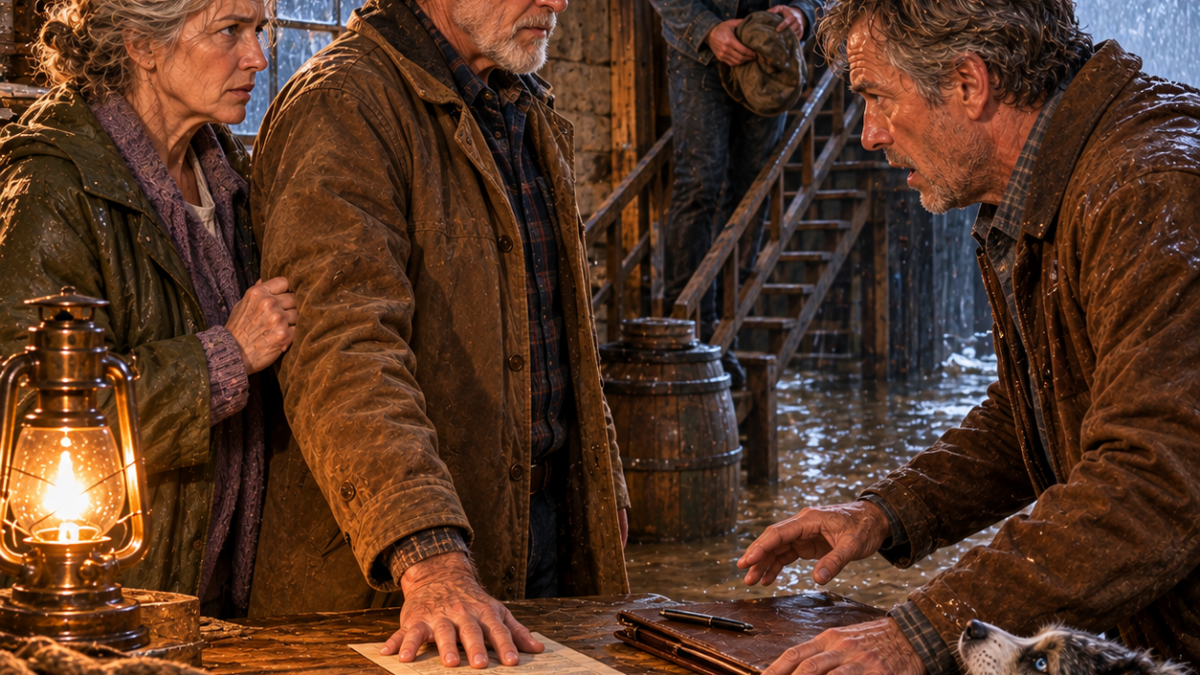
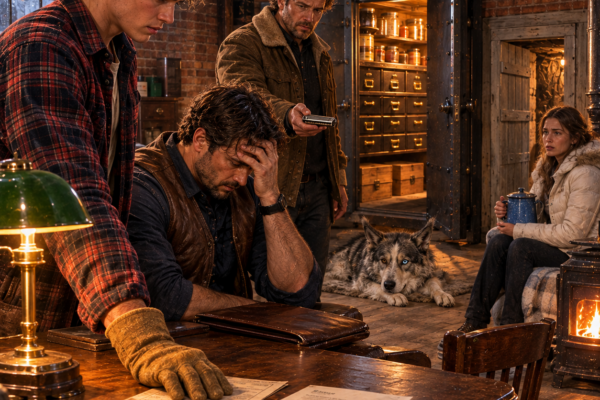
Walter looked at his youngest brother for a long moment. Then he reached out and put his hand on Dwaynes shoulder and left it there.
He did not tell him it was forgotten. It was not, and they both knew it, but he kept his hand on his brothers shoulder, and Dwayne bowed his head, and that was as far as either of them could go that night.
It was a gate unlatched.
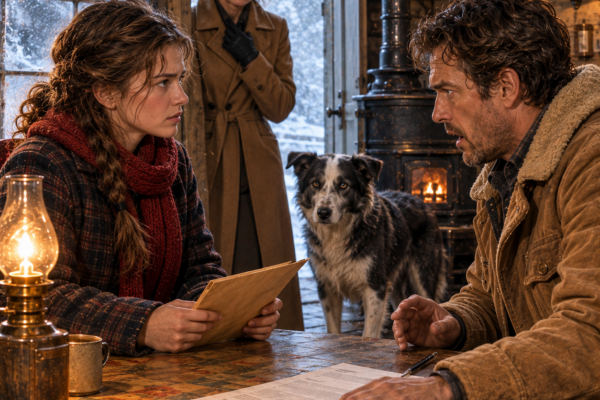
It was not yet a gate swung open. Sometime after midnight, Walter woke on the floor by the stove and found Merl standing at the little round window, looking out at the dark where the river was.
What are you going to do with them? Merl said without turning around.
The trees.
Walter thought about it for a long time.
Nothing yet, he said. Grandpa said not to let anybody hurry me.
I believe Ill take him at his word.
Merl nodded slowly, still looking out at the dark.
He never once said a thing like that to me, he said. Not once in my whole life.
He was quiet. I suppose I never gave him a reason to.
Walter did not answer. After a while, Merl came back from the window and lay down on the floor on the other side of the stove and pulled his wet jacket over himself, and Walter heard his breathing go long and slow, the way it used to when they were boys sharing a bed in the farmhouse attic 60 years ago.
The river crested a little after 3:00 in the morning.
Walter felt it more than heard it.
A change in the groaning of the old beams, a steadying.
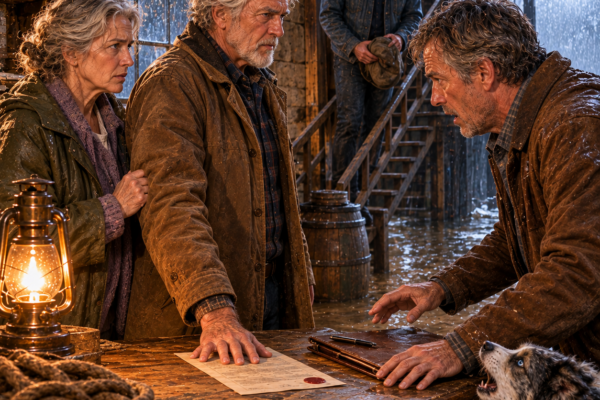
By first light, it had begun to fall. At 10:00 on Sunday morning, a motor came buzzing up the flooded bottom, and then another, and Walter went down to the loading door and found Leland Briggs in his johnboat, and behind him, two young men from the volunteer fire department in a second boat.
Leland looked up at four faces in the loading door and a dogs face between them and took off his cap.
Well, he said, Seems the room held.
He looked at Merl, standing behind Walter in the loading door, soaked and gray-faced, and something passed over Lelands face and was gone.
Morning, Merl, he said. That was all, but he held the boat steady for him just the same as for the others.
They brought everybody out one at a time through the window.
In the weeks after things settled the way rivermud settles slowly Hollowell Hardwoods withdrew from the contract and Merl sold his last tractor and his combine to pay back their $50,000.
In May he sold the farm to a neighbor, the Halverson boys from across the creek for a fair price without the walnut and the deed carried a right of way for Walter to reach his trees.
Merl paid off the bank and bought a small house on Elm Street in Cobbs Ferry. In June, a cashiers check for $14,000 came to Walter at Lelands store with a single line on a slip of paper.
Im sorry. M.
Walter did not sell the trees. In the fall, with a forester Celia found for him, he marked 12 of the oldest walnuts on the creek bottom, the ones that had stopped growing, and sold them.
and the money was more than he had earned in any 5 years of his life.
He used it on the mill. He had the mud shoveled out and the floors rebuilt.
He had a new water wheel built from the plans he had drawn on the backs of feed receipts at 24 years old, which Ada had found folded in the bottom of her sewing basket, where she had kept them all along. By the next spring, the old stones were back on their bed, and Kesler Mill was grinding flour again for the first time in 48 years.
The first sack of flour that came off the stones, Walter tied with twine himself and carried up Main Street to the feed store and set it on Lelands counter.
Whats this?
Leland said 90 years late, Walter said. Dont you start.
And the room under the roof stayed stocked.
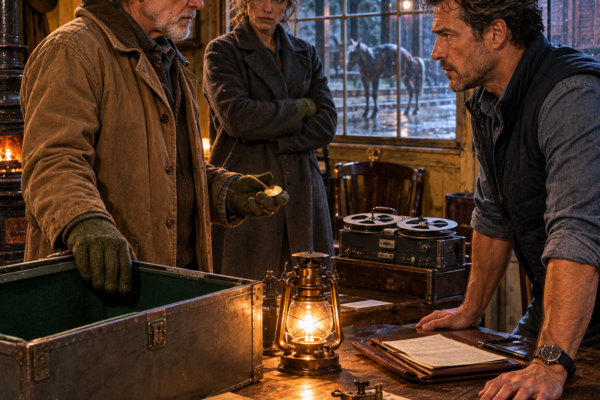
Walter showed it to Leland and to the fire department and to the county and told them all the same thing. It was there for anybody the river left behind and nobody ever had to tell where they had been.
Dwayne came out on Saturdays to help with the wheel.
Merl came once in August and stood in the milly yard a long while looking up at the gable and did not come in.
In October he came again with the old kitchen table and the rocking chair from the cottage roped in the bed of his truck. And that time he came up the stairs.
He did not say much.
He helped Walter carry the table up to the second floor and set it by the window and he sat at it and drank a cup of coffee. And when he left he said he might come back Saturday if that was all right.
Walter said it was.
The river came up the following April, as it does every April, and on the second night of high water, just at dark, Post lifted his head from the loading door where he liked to lie, and gave one low sound toward the river road.
Walter went to the door and looked out.
Someone was coming up the road through the rain. A young man, thin and wiry, in a soaked gray hoodie under a thin windbreaker, with a trash bag over one shoulder and the water halfway to his knees.
He stopped at the edge of the millard when he saw the light in the door. He stood there in the rain, not sure whether he was welcome.
Post went down the stairs to meet him.
He said his name was Caleb Dunore.
He was 24. The river had come into his trailer downstream in the night, and he had nowhere else to go, and he had seen a light up the river road.
Walter did not ask him anything else. He brought him up the stairs, and Ada sat him by the stove and put a cup of coffee in his hands, and a plate of bread and honey in front of him, and a dry quilt around his shoulders.
When he tried to say he could pay them back someday, Walter shook his head. My grandfather had a saying, he said.
Build high and leave room for the neighbors.
Well, youre the neighbors tonight. Thats all there is to it.
Caleb Dunore looked at him for a long moment over the rim of the cup.
Then he set the cup down and pressed the heels of his hands against his eyes and sat that way a while, and Ada let him. Later, when the boy was asleep in the bottom bunk under the roof with post across the doorway, Walter stood in the loading door with his wife and watched the river.
It was high and brown and loud, and it would go down again.
It always did.
Behind them on the windowsill of the second floor sat a blue and white porcelain pitcher with a chip on the lip.
In the morning, when the sun came up over the cottonwoods, it would touch the pitcher before it touched anything else in the mill.
Walter put his arm around Ada. Below them, for the first time in 48 years, the waterhe turned slowly in the dark.