A Homeless Girl Saw a Mafia Boss Being Buried Alive—What She Did Next Left the Entire City Stunned – Part 4
The freeze that came out of Mr.Raldi’s hospital room the day after went all the way down.
Every account, every property, the note on the house in Leoo, a boat, two cars, the whole works, and it’s all locked up in the state’s hands now pending forfeite.
So, he’s got nothing.
He’s got less than nothing.
He can’t rent a room.
He can’t hold a job under his own name.
He can’t board a plane.
He can’t walk into a hospital.
And a man of 48 who spent his whole life a phone call away from anything he wanted has no earthly idea how to live like that. Brangan put his hat on.
Which is what worries me. A man with resources runs.
A man with nothing left comes back to the only ground he knows. The mobile clinic ran out of a converted step van in the gravel lot behind the old feed store two nights a week. and Delaney had put it together herself in the spring with a nurse practitioner who volunteered her license and a folding table and a plastic tub of supplies.
And by autumn, there were 30 or 40 people in the line most nights. Blood pressure, blood sugar, wound checks, refills for people whose prescriptions had lapsed because a person needs an address to have a pharmacy.
Nobody was asked for a name they didn’t want to give, and nobody was asked for anything else at all.
and Delaney had learned that this was the entire reason the line got longer every week. The man came the first time on a Tuesday.
Clean shaven, ball cap low, a canvas coat too good for the rest of him, complaining of headaches and asking whether they had anything for pressure. She took his blood pressure and it was high and she told him so and told him to come back.
He came back the following Tuesday.
He was quiet and polite, and he didn’t look at her much, and she thought, without thinking it very hard, that he had the manner of a man who used to be somebody, which described about a third of the people in that line.
On the third night it rained, they ran late, and the line ran down to five or six people, and he was near the end of it, and she waved him up and got out the cuff and told him to push his sleeve. He put his arm on the table, and Delaney was looking at his hand.
She’d wrapped a cuff around several thousand arms by then, and the first thing she looked at was always the hand, because the hand tells you about the person before the numbers do.
And what she saw on this one was a ridge of built-up callous across the base of the ring finger, and a band of skin, a shade paler than the rest of it. Her own hands kept working. She heard herself say something ordinary about the weather.
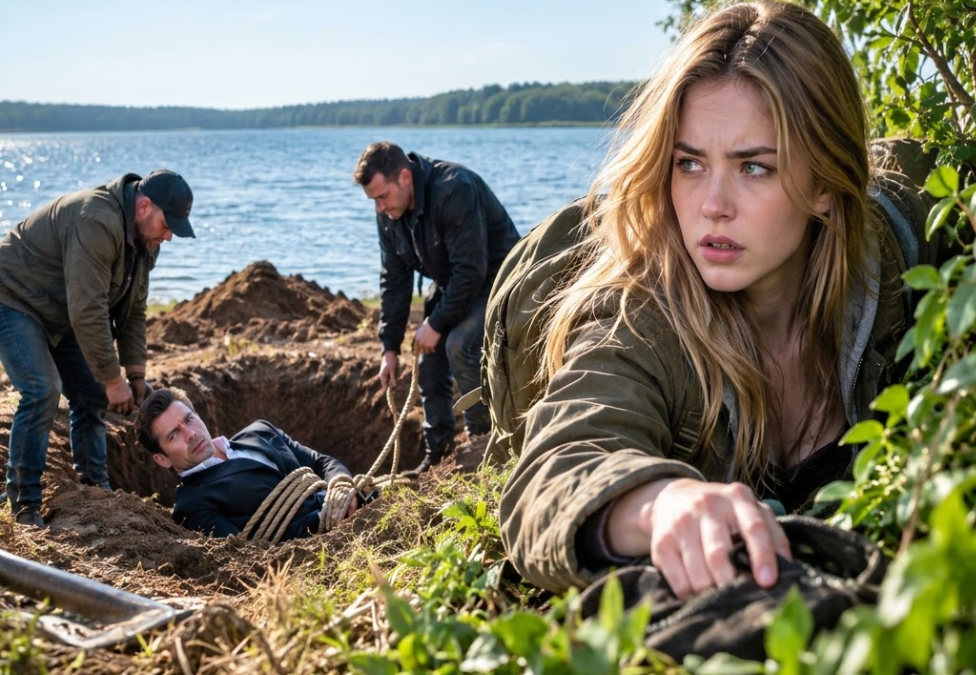
She got the cuff on and pumped it and watched the needle and did not see the needle at all because she was in the wet leaves again with her ribs aching and the headlights swinging across a man who crouched down beside a hole with a telephone in his hand and no jewelry on him anywhere.
That’s a little better
than last week.
She said, “Sit tight.
I’m going to get you the 30-day.”
She turned to the back of the van and she picked up her own phone off the shelf with her body between it and the table and she pressed the button for the last call she’d made and typed four words underneath it and she hit send and when she turned back around the chair was empty and the man was already at the end of the lot moving fast.
She should have let him go. She would think about that for years.
She went after him instead.
And it wasn’t courage and it wasn’t recklessness.
It was something much simpler than either, which was that she had spent 8 months of her life sleeping under the hull of a boat because of a piece of paper this man had signed, and she was not going to stand in a gravel lot in the rain and watch him walk out of the world a second time. He went for the docks. That was his mistake.
He’d have been fine on the county road.
He’d have been fine going up through the yards toward the interstate, but he went down the embankment toward the water because water looks like a way out to a man who doesn’t know the ground.
And Delaney knew that ground the way she knew her own name. She knew the chain link ran unbroken behind the boat works for 200 yards. She knew the gap in the fence at the propane yard was welded shut.
She knew the alley behind the ice house deadended in a loading dock 4 ft high and slick as a skating rink in the rain.
And she knew that if you didn’t know it, you would go down there because from the mouth of it, it looked like it went through.
She stopped at the mouth of it and she stood there in the rain with her hands on her knees getting her breath and she watched him get to the dock wall and turn around. He came back at her. He got maybe halfway and the whole alley went white, headlights and spotlights from the far end and both sides and there were voices shouting and the county was there.
Three cars and Branagan out of the first one with his hand up saying, “Stop.”
and Salvatore Braco stopped and stood in the rain with the light on him and put his hands behind his head like a man who had known for some time that this was how it ended. They walked him out past her.
He was soaked through and he looked older than he had under the sodium lights of the clinic.
And he stopped in front of her and the deputy let him stop and he looked at Delaney with an expression that wasn’t hatred and wasn’t fear and was much closer to amusement.
“How do you think I found out where you slept?”
he said.
She didn’t understand.
Ask inside your own family, Braco said. Then they put him in the car. Delaney stood there in the rain with the water running off her chin and the lights turning slowly across the wet brick and she was still standing there when a car door slammed somewhere behind her.
And Cassian came down that alley with his coat open and no umbrella and his gate still wrong. And he got hold of her by both shoulders and looked at her face and then he pulled her in against him and held on and she felt him shaking, not the cold.
The other thing, the man who had crossed a warehouse floor and erased another man from his life without changing his voice, was standing in a flooded alley behind an ice house with his arms around her and his whole body trembling, and he said her name once into her wet hair, and Delaney lifted her head and kissed him. Neither of them said anything for a long time after that. The rain kept coming.
Somewhere up the block, the last of the county cars pulled out with its lights still turning. The door of the guest house stayed shut for 10 days.
On the third of them, Cassian stopped standing outside it and went and found Branigan instead and asked him one question, which was, “What happens to the belongings of a woman who dies in a rented room and whose daughter has no fixed address and nowhere to send anything?”
Branigan said it depended.
He said sometimes a
landlord throws it in a dumpster and sometimes a county has a policy and that if there was a policy in this instance, it would have been the sheriff’s civil division that carried it out because the row had been cleared under a court order and everything left behind in a court-ordered clearance gets inventoried.
Cassian asked where the inventory went. Brangan said the county contracts it out.
He drove himself.
That was the part Hargrove couldn’t get over afterward.
that the man had four people on payroll whose entire function was to go and get things and he drove himself out to a storage yard on the far side of Ferndale where a woman behind a window told him that the county contract had changed hands 2 years back and that anything from that period would have gone to the successor company and she wrote a name on a slip of paper and slid it under the glass. The successor
company was a self-s storage operation off the state highway with a gravel apron and a manager who wanted a case number.
Cassian didn’t have a case number.
He had a name and a street and a year.
And he stood at that counter for 40 minutes while the manager went through a binder and said more than once that this wasn’t how it worked.
And then somewhere in the second binder, the man stopped turning pages and said, “Merc ne, there was a fee.
It had been acrewing monthly for nearly a year, and nobody had ever paid it, and by policy, the contents should have gone to auction 11 months earlier, and had not, for no reason anybody could account for except that a box gets pushed to the back of a shelf and stays there. Cassian paid the fee.
He signed the release form on the counter with the manager watching him, and he wrote his own name on it, not a company name. And then he followed the man down a corridor of roll doors to a unit in the back and waited while the light came on.
It was one box, cardboard. The flaps folded over each other, taped once across the middle and gone soft at the corners the way cardboard goes in a place with no heat. It weighed almost nothing.
He carried it out himself and set it on the backseat of the car rather than the trunk. And he drove the state highway back toward St.Louis at 55 m an hour in the right lane with a box on the seat behind him.
And at some point he put his hand back and rested it flat on the top of it and drove the last 20 minutes that way. He did not open it.
He thought about it in the parking lot of a filling station outside Belleville, sitting there with the engine off, and he understood two things at once.
That whatever was in that box was the last thing on earth that belonged to a woman he had never met, and that he had spent his entire adult life opening things that weren’t his, and calling it due diligence.
He put both hands back on the wheel. at the house.
He carried it up the gravel path and set it down on the step of the guest house square in the midst where she couldn’t miss it.
And he knocked twice and then walked away without waiting because he had already decided on the drive that waiting would make it a transaction.
And it wasn’t going to be one.
He was most of the way back down the path when he heard the door open behind him.
He didn’t turn around.
He stood there in the cold with his back to her for a moment and then he kept walking. and behind him he heard the box being lifted and then the door closing again.
And that was all. She sat on the floor with the box between her knees and cut the tape with a kitchen knife and folded the flaps back.
And the smell that came up out of it was the apartment on Larkin Row, dust and old paper and the lavender soap her mother had bought in the same brand for 30 years. And Delaney had to sit with her hands on her thighs for a while before she could go any further.
There wasn’t much in it.
a church directory, a shoe box of photographs with the corners gone soft, a hospital identification band cut off at the wrist and flattened with her mother’s name printed on it in faded ink.
And down at the bottom, an envelope gone the color of weak tea with writing on the front in a hand that had trouble with the loop of the L for Delaney to be read when you’re strong enough.
She read it in one sitting on the floor with her back against the bed.
My girl, it said, if you’re reading this, then I’ve gone on ahead and you finally decided you can stand it.
And I hope that took you a good long while because I never wanted you to be the kind of strong that comes early.
There’s a thing I need to tell you, and I’ve been putting it off because I’m a coward about your face.
I stopped the treatments.